In this Issue: 
-
-
-
- Upcoming events
I. No-till Organic Grain Production Trials
By: Carrie Brinton and Dr. Chris Reberg-Horton, Dept of Crop Science
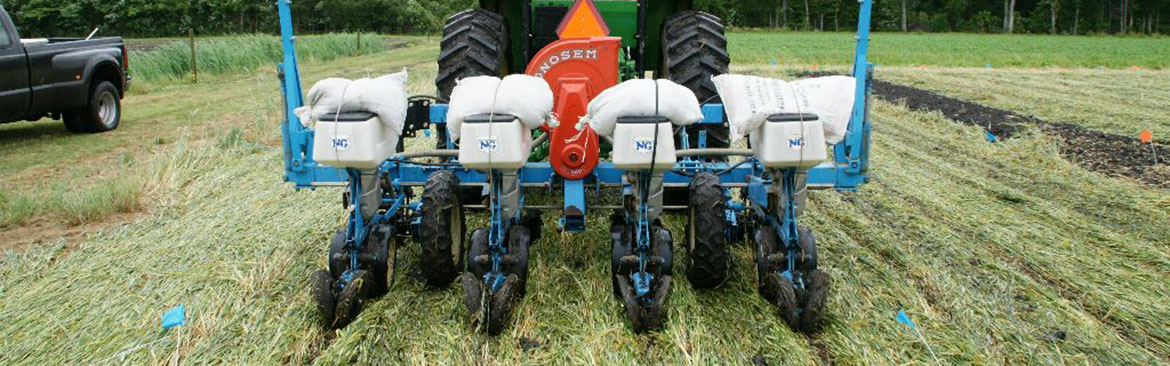
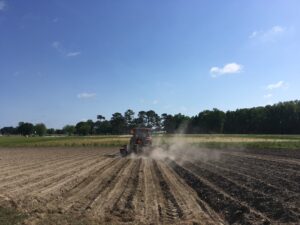
Weed management is a huge challenge in organic grain production. We are currently studying an innovative system developed by the Rodale Institute in Pennsylvania. This management approach is known as “roll-kill/no-till”. Under this system, a cover crop is planted in the fall. In the spring, when the cover crop has come into bloom, it is rolled down with a crimper roller to effectively kill the cover crop as it lays it down. The cover crop then serves as a mulch layer for the grain crop that is planted with a no-till planter immediately after roll-down. Unlike conventional no-till systems that rely on herbicides to burndown the cover crop, this system has potential in organic production because the cover crop is killed by the crimper roller, therefore overcoming the need for herbicides. The other unique aspect: organic production can be no-till, which provides many benefits – from soil moisture to organic matter and beyond. The mulch layer hinders weed germination and drastically reduces competition with the crop, allowing farmers reprieve from cultivation as their weed management tool.
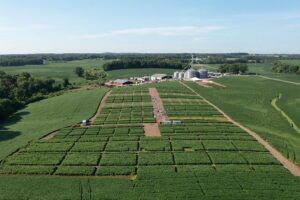
Success for killing the cover crop depends on the crop being in full bloom. In order to determine which cover crops work well in this region and compliment the planting schedule for corn and soybean, we planted 20 varieties at 7 locations, from Salisbury to Tyner.
In fall 2008, we planted 6 rye varieties that will be followed this spring by a soybean crop. We planted 14 legume varieties, including - berseem clover, subterranean clover, sweet clover, crimson clover, hairy vetch, common vetch, winter pea and blue lupine – that will be followed with a corn crop.
In addition to variety selections, we have 3 dates scheduled for each legume variety to be rolled-down. The same concept applies for rye followed by soybean; however, since there is less variability in rye flowering, only 2 roll dates are scheduled. This information will allow us to determine which varieties are more appropriate for early, mid and late plantings. For all varieties, we will be assessing kill rates and weed suppression. For legumes, we will also assess the nitrogen content of each legume variety to determine which ones maximize nitrogen contribution to the system.
There are field visits scheduled at our various locations for anyone interested in seeing the system firsthand. ( See below Upcoming Events )
II. Organic Corn Hybrid Selection
By: Dr. Ron Heiniger, Extension Specialist, Crop Science, NCSU
Hybrid selection is a critical component of any profitable corn production system. Skillful hybrid selection requires that growers: (a) understand the field environment (b) know how a corn plant grows and develops and (c) collect and properly evaluate information describing the characteristics of hybrids available in their area. The Organic Food Production Act and Regulations (October 2002) state that seed should be organically grown. Unfortunately, many of the organic hybrids that are available are not well suited to growing conditions in North Carolina. However, growers can get a waiver from their organic certification specialist to use untreated corn seed when adapted corn hybrids are not available for their area. Organic corn growers in North Carolina should check with their certification specialist to determine if a given hybrid can be certified before making a selection.
Hybrid Characteristics for Organic Production
For organic growers seeking to identify appropriate corn hybrids, yield is NOT the primary consideration. The key hybrid characteristics for organic corn production are:
- Rapid early growth and vigor
- Standability
- Pest and Disease Resistance
- Stress Tolerance
- Yield
Rapid early growth and vigor
Rapid early growth is essential in minimizing the effects of seedling diseases and insects, increasing root volume, and in reducing weed infestation. Hybrid seed companies list seed vigor ratings. However, there are few that have ratings covering early growth. In general, early growth is closely related to hybrid maturity. Early to medium maturing hybrids (102 to 114 day relative maturity) tend to exhibit better early growth than do late hybrids (> 115 day relative maturity). The best way to select hybrids with rapid early growth for North Carolina is to contact extension agents, seed company representatives, and other growers who have had experience with different corn hybrids.
Standability
Standability is important because it is a measure of how well the crop will stand under difficult environmental conditions. Since pests and diseases can be problems it is important that an organic hybrid has the ability to avoid lodging under stress. Most all hybrid seed suppliers provide ratings for standability or stalk or root strength. Table 2 lists some organic and appropriate commercial hybrids with standability ratings for each.
Pest and Disease Resistance
Resistance to common seedling, leaf, and stalk diseases is an important characteristic for hybrids in organic production systems. There are even some hybrids which tolerate insect pests such as European Corn Borer and Southern Cornstalk Borer. Unfortunately, most hybrids do not have resistance to a wide range of diseases or pests. Growers should select hybrids that combine good early growth characteristics with a good resistance package to diseases that are major problems in their area. Table 2 lists some organic and untreated commercial hybrids with ratings for common diseases.
Stress Tolerance
Stress tolerance indicates the ability of a hybrid to tolerate drought or other environmental stresses and produce acceptable yield. Hybrid seed suppliers often refer to this characteristic as drought tolerance. This characteristic is important since a lack of nitrogen (available nitrogen can be a problem in organic systems particularly when first starting an organic production system) can lead to nutrient and drought stress.
Yield
Growers should look for yield data collected from variety tests conducted using organic practices. Since fertility, weed, disease and pest pressures will differ from tests conducted using conventional growing practices, the only reliable indicator of yield potential in organic systems will come from tests conducted using organic practices. Unfortunately, there is a limited amount of organic yield test information available. Growers should conduct their own hybrid comparisons by selecting 4 to 6 promising hybrids and evaluating them on their farm with their management practices. The best procedure for grower testing of hybrids is the strip test where each hybrid tested is grown adjacent to a common "tester" hybrid. The strip test, with tester hybrids, permits any yield data collected to be adjusted for soil variability. If not using a tester, growers should place the hybrids they are considering beside the hybrid that has performed best for them in the past. Growers conducting their own hybrid evaluations must remember to select uniform test fields with minimal soil variability and restrict comparisons to hybrids of the same maturity.
Important Considerations for Selecting Organic Corn Hybrids
- Hybrids with relative maturities between 110 and 112 days often had greater yield compared with later maturing hybrids. These hybrids had the ability to grow quickly resulting in the ability to capture more light for a longer period of time. Short season hybrids from organic seed companies were not well adapted to the environment in North Carolina .
- While grain yield from organic hybrids was always lower than that from untreated conventional hybrids, adapted organic hybrids performed well across a range of conditions including a severe drought in 2008.
- More information is needed to determine the levels of disease and pest resistance present in organic corn hybrids.
III. NC Organic Grain Buyers
This is a list of organic grain buyers in the state. There are many other companies in the region and country who would be interested in buying organic grain from NC. You can see other buyers at our website: www.organicgrains.ncsu.edu/marketing/buyers.htm
Bay State Milling Company
Mooresville, NC 28115
Contact: Doug Lockwood
Email: dougl.co@bsm.com
Phone: 970-785-2794 ext. 24 or toll-free: 888-785-7636
Buys: organic, food-grade hard and soft wheat
Braswell Milling
Nashville, NC
Contact: Jackie Bunch
Email: jackieb@braswellfoods.com
Phone: 252-459-2143
Buys: organic, feed-grade corn, wheat, and soybeans (2010)
ECSP, LLC
Pantego, NC
Contact: Austin Hodges, Manager
Email: austin@ecspllc.com
Phone: 252-935-5553
Buys: organic soybeans (2009). Planning on certifying to process organic in 2009.
Lindley Mills
Graham, NC
Contact: Joe Lindley
Email: lindleymills@aol.com
Phone: 336-376-6190
Buys: organic, food-grade hard and soft wheat (some corn and rye)
Organic Valley Cooperative
Dairy farms throughout NC Piedmont
Contact: George Teague
Email: gyteague@aol.com
Phone: 336-684-4883
Buys: organic corn, wheat, barley, soybeans, hay. Will contract acreage of organic crops.
IV. Upcoming Events
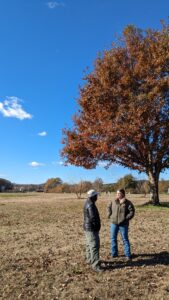
Three workshops will be held this spring on farms in the Piedmont , Coastal Plain, and Blacklands. At each farm selection of varieties of rye and legume cover crops have been planted. These cover crops will be roll-killed and corn or soybeans will be no-till planted into them. At these workshops, we will demonstrate how well different cover crops worked in this system to smother weeds, and allow for accurate and timely crop planting and growth. We will also have a brief discussion on organic wheat production at each workshop.
For more information about these workshops, or to register for a workshop, please contact:
Molly Hamilton, Extension Assistant, at molly_hamilton@ncsu.edu or 828-273-1041
May 7
Location: Hoffner Dairy Farm in Mt. Ulla, NC (near Salisbury)
Time: 5-7 p.m.
May 28
Location: Looking Back Farm in Tyner, NC (near Hertford)
Time: 5-7 p.m.
June 4
Location: Pocosin Farms in Pantego, NC
Time: 5-7 p.m.
-----------------------
April 28, 2009: Rolling Cover Crops
Location: Breeze Farm
Time: 3-5 p.m.
For more information on this workshop, please contact Karen McAdams at karen_mcadams@ncsu.edu or 919-245-2050
------------------------
We are also planning an organic crop conference for January 2010. This conference will be held in conjunction with the Joint Grower Meeting in New Bern, and will focus on issues of organic grain, tobacco, and large-scale vegetable production. Conference topics, speakers, and format will be directed by farmers and agriculture advisors. A committee has been formed to help with directing the conference, and if you wish to participate or just send some of your ideas, please contact:
Mac Gibbs (Hyde County Extension Director): 252-926-4488 or mac_gibbs@ncsu.edu
OR
Mary Wilks (Carolina Precision Consulting, Inc): 252-883-6321 or marytwilks@yahoo.com
|