Subject: USDA SEEKING APPLICATIONS IN NORTH CAROLINA FOR ORGANIC INITIATIVE
Raleigh, NC. (Nov. 22, 2011) – USDA’s Natural Resources Conservation Service (NRCS) is seeking applications for a national initiative being offered in North Carolina. Administered under the 2008 Farm Bill’s Environmental Quality Incentives Program (EQIP), the EQIP Organic Initiative helps certified organic producers and those transitioning to organic production meet their conservation goals. Technical and financial assistance will help producers plan and implement conservation practices to allow their organic operations to be environmentally sustainable.
Funding for the EQIP Organic Initiative will be available soon. Now is the time for certified organic producers and those transitioning to organic productions to work with their local USDA Service Center to establish eligibility and apply so that their applications can be considered when funds become available.
EQIP is primarily used to provide financial and technical assistance to implement conservation practices to address soil, water, air, plant, animal, and energy resources. An organic provision targets organic producers and producers transitioning to organic production:
- Assistance is for conservation practices related to organic production
- Assistance is limited to $20,000 per year and $80,000 during a six year period
- Producers are required to develop and carry out an Organic System Plan (OSP) or carry out practices consistent with an OSP
- Producers must be pursing an organic certification or in compliance with their organic certification The initiative is available for farmers who are certified organic, transitioning to certified organic, or organic exempt according to USDA’s National Organic Program regulations. Farmers can submit applications for the initiative anytime throughout the year. However, NRCS will begin ranking eligible EQIP Organic Initiative applications on February 3, 2012 for possible funding. Applications are ranked based on greatest environmental benefit. For an application to be considered complete for ranking all land and producer eligibility requirements must have been met. Applications that are not complete by the first ranking date will be deferred to the next ranking period, which is anticipated to occur on March 30 and June 1, 2012.
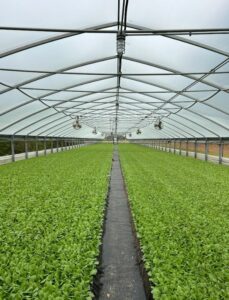
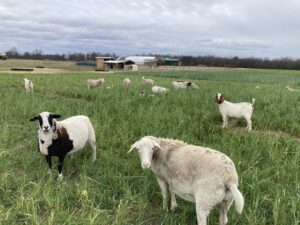
Under the EQIP Organic Initiative applicants can apply for numerous conservation practices that benefit natural resources including: experimenting with cover crops and crop rotations, installing intensive grazing infrastructure (grazing plans, internal fencing and water lines), establishing wildlife and pollinator friendly habitat, and installing seasonal high tunnels. Applicants who apply for the national initiative can also apply for conservation practices under the general EQIP program.
Farmers should visit their local USDA Service Center today to apply for available funding for Farm Bill programs and initiatives; locations are listed on-line at http://offices.usda.gov or in the phone book under Federal Government, U.S. Department of Agriculture. General program information is available on the NRCS North Carolina website at www.nc.nrcs.usda.gov. The USDA is an equal opportunity provider and employer.
SUBJECT: NC Organic Production Assistance Deadline March 4, 2011
Date: December 14, 2010
Raleigh, NC –North Carolina organic producers and those transitioning to organic farming have until March 4, 2011 to sign up for the Environmental Quality Incentives Program (EQIP) Organic Initiative. The USDA Natural Resources Conservation Service (NRCS) administers the initiative. Under the EQIP Organic Initiative, approved applicants can receive up to $20,000 per year or $80,000 over six years.
A number of "core" organic conservation practices may be funded through the initiative including cover crops, conservation crop rotation, prescribed grazing, pest management and nutrient management. All conservation practices offered under "general" EQIP are also available through the EQIP Organic Initiative including but not limited to fence and watering facilities for rotational grazing, erosion control practices, field borders, etc.
Applicants who are currently certified organic will need to include their organic system plan (OSP) reviewed by a USDA accredited organic certifier when applying for financial assistance in the EQIP Organic Initiative. Applicants who are transitioning to organic will need to submit a self-certification form to the NRCS acknowledging that agree to develop and implement conservation practices for certified organic production that are consistent with an organic system plan. The self-certification form may be obtained at time of application from any NRCS Service Center.
For more information on NRCS, programs and the EQIP Organic Initiative contact your local field office or visit us on the Web at www.nc.nrcs.usda.gov.
Contact: Stuart A. Lee
Phone: 919.873.2107
--------------------------------------------------------------------------------------------
SIGN-UP FOR ORGANIC INITIATIVE UNTIL MARCH 12, 2010
Raleigh, NC –The Natural Resources Conservation Service (NRCS) has set the sign-up date for the Organic Initiative to end on March 12, 2010. The 2008 Farm Bill provides specific opportunities for organic producers and those transitioning to organic farming.
North Carolina farmers who are transitioning to organic or who are currently certified organic can now apply to receive assistance under the Organic Initiative through the Environmental Quality Incentives Program (EQIP). Under the Organic Initiative, approved applicants can receive up to $20,000 per year or $80,000 over six years.
A number of "core" organic conservation practices may be funded through the Organic Initiative, including cover crops, conservation crop rotation, prescribed grazing, pest management, nutrient management, and forage harvest management. All conservation practices offered under "general" EQIP are also available through the Organic Initiative, including but not limited to fence and watering facilities for rotational grazing, erosion control practices, field borders, etc.
EQIP is a voluntary conservation program reauthorized in the 2008 Farm Bill. It supports production agriculture and environmental quality as compatible goals. Applications for EQIP are taken continuously throughout the year. However, to be considered for Fiscal Year 2010 funding under the Organic Initiative, producers need to have an application signed and returned to their local NRCS office by March 12, 2010.
Applicants who are currently certified organic will need to include their organic system plan (OSP) reviewed by a USDA accredited organic certifier when applying for financial assistance in the Organic Initiative under EQIP. Applicants who are transitioning to organic will need to submit a self-certification form to the NRCS acknowledging that agree to develop and implement conservation practices for certified organic production that are consistent with an organic system plan. The self-certification form may be obtained at time of application from any NRCS Service Center.
Some participants are eligible to receive a higher payment rate; those are limited resource farmers, beginning farmers, and socially disadvantaged groups. For more information, go to www.nrcs.usda.gov/programs/SLB_Farmer/.
For more information contact your local field office.
--------------------------------------------------------------------------------------------
EQIP Money Available for Organic, May 11, 2009
Last week the USDA announced the availability of special funding under the Environmental Quality Incentives Program (EQIP) to support growers who wish to improve their conservation practices and expand their organic system. Organic and transitional growers can apply for support in applying any of the practices currently included in the EQIP payment list. This is an outstanding opportunity, with over $1 million available for North Carolina. But the deadline is coming soon!
The signup period for this organic initiative program runs from May 11 (today!) to May 29, 2009. The application is two pages long and should be fairly straight forward for all categories of farmers to apply within the time frame, with a more detailed work-plan submitted after the contract has been accepted by the NRCS. Farmers are eligible for $20,000 per year. If growers have already applied they need not apply again.
While there is no guarantee that dollars would be available after this cutoff date, farmers could still put in their applications by May 29 in case more money becomes available from the state NRCS office. If North Carolina does not use up its allocation, that money will become available to other states that have applications pending, and will likely result in NC getting less money next year.
If any growers have questions they can call their local NRCS offices or Larry Elworth 828 285-9340 who is working with the Organic Grain Project.
---------------------------------------------------------------------
Organic Valley Forms Grower Pool, May 2008
In an unprecedented effort to provide market stability to both crop growers and livestock producers, Organic Valley Family of Farms is opening its membership to organic crop growers with the introduction of its Grower Pool.
With more than 1,200 member farms, Organic Valley is America 's largest cooperative of organic farmers and is one of the nation's leading organic brands. Growers joining the pool will benefit from a guaranteed floor price for their crops on a long-term contract basis and will be able to enroll all or portions of their crop acreage in the pool. Organic Valley will offer contracts for feed-grade grains, beans, oilseeds and hay beginning with the 2008-2010 cycle.
Similar to Organic Valley 's current dairy, meat and produce pools, the Grower Pool's prices will reflect differences in the co-op's 15 grower regions. Members will form their own executive committee to develop policy and pricing guidelines. After one production year, any member can add a year to the contract at a newly set floor price, or can opt out of the pool.
"Our objective is to establish regional floor prices for crops that are clearly profitable for growers yet still affordable for our livestock producers," said Lowell Rheinheimer, farm resources manager for Organic Valley . "Growers also will have the benefit of becoming true partners in the production of organic food with other farmers who believe in environmentally-responsible farming - rather than selling their feed crops into an anonymous and turbulent marketplace. "A substantial number of farmers are already seeking to join the pool," Rheinheimer added.
"The hallmark of Organic Valley for its 20 years has been the price stability it offers its member farmers," said George Siemon, chief executive officer of Organic Valley . "Our Grower Pool carries that tradition. It's a good opportunity to bring two groups of farmers together to negotiate in cooperation and to ultimately provide stability to both."
Farmers interested in joining the Grower Pool may contact CROPP Cooperative at 888-809-9297.
Source: Organic Valley Family of Farms
---------------------------------------------------------------------------------------------
Two new grants support NCSU's Organic Grain Project, Feb 5, 2008
Two recent grants will support the organic grains program at North Carolina State University and provide education to promote the production of organic grain in the state, according to Dr. Chris Reberg-Horton, assistant professor of crop science and organic cropping specialist in the College of Agriculture and Life Sciences.
The organic grains program recently received $100,000 from Golden LEAF, a foundation dedicated to the long-term economic advancement of North Carolina, and $35,000 from Organic Valley, an organic dairy cooperative. The funds will support education and extension programs on organic grains.
“Golden LEAF is excited to be a part of the expanding organic grains industry in North Carolina,” said Valeria Lee, president of Golden LEAF. “Providing opportunity for growth is paramount to the success of a competitive agricultural community.”
“Ensuring a strong supply of organic grains is key to the potential of organic livestock farmers in North Carolina and the nation. Organic crop growing is a viable long term market and we want to encourage conventional farmers to transition to organics,” said George Siemon, chief executive officer for Organic Valley Family of Farms. “We’re confident NC State’s efforts will help area farmers meet the current organic grain needs in the short-term, and we hope their efforts will make a positive impact for the generation and beyond. We’re happy to help them be a part of the solution.”
The organic industry is the fastest growing niche in the agricultural sector, with many mainstream food retailers joining the bandwagon. The organic market pays a premium for most crops, so organic grain can earn growers more cash per acre than conventional grain, according to Reberg-Horton.
Organic grain is particularly important to producers of organic poultry, livestock and dairy products, who rely on organic grains as a feed source. Currently, about $8 million in organic grain is imported to the state for this purpose each year. North Carolina is the nation’s leading producers of organic eggs, Reberg-Horton said.
The state has a limited market for organic grains for human consumption, but that market could increase as growers produce more grains and new grain processors come on line. The market for organic crops is expected to continue growing at an annual rate of over 20 percent.
The goals of the education and extension program in organic grains are to increase the number of farms producing organic grains, increase the profitability of organic grains on farms already producing organic grains, and expand the organic grain market by increasing the number of organically certified grain processors.
In planning for the grant, Reberg-Horton and his colleagues convened a meeting of farmers, county agricultural agents, non-profits and extension specialists to determine critical needs for expanding the organic grain industry in North Carolina.
“One item that received unanimous support was to showcase farms that are already growing organic grains. Most farmers in the state are unaware of our organic grain farms, and their successes will highlight the potential in this industry,” Reberg-Horton said. “The group wanted to host field days at these farms, do on-farm testing and demonstrations and have quarterly meetings where farmers could share information.
“Our planning group also identified weed management as the number one concern in the transition to organic, with soil fertility not far behind. We will conduct a series of tests on farms to improve weed and fertility management. Those tests will include cultivation practices, fertility sources, and the use of cover crop mulches to control weeds.” The group is organizing a bus tour of organic grain farms in Maryland, Pennsylvania and Virginia for July 24 to 26, 2008.
For more information on the organic grains program at N.C. State, visit the Web site: http://www.organicgrains.ncsu.edu/
--Natalie Hampton
|